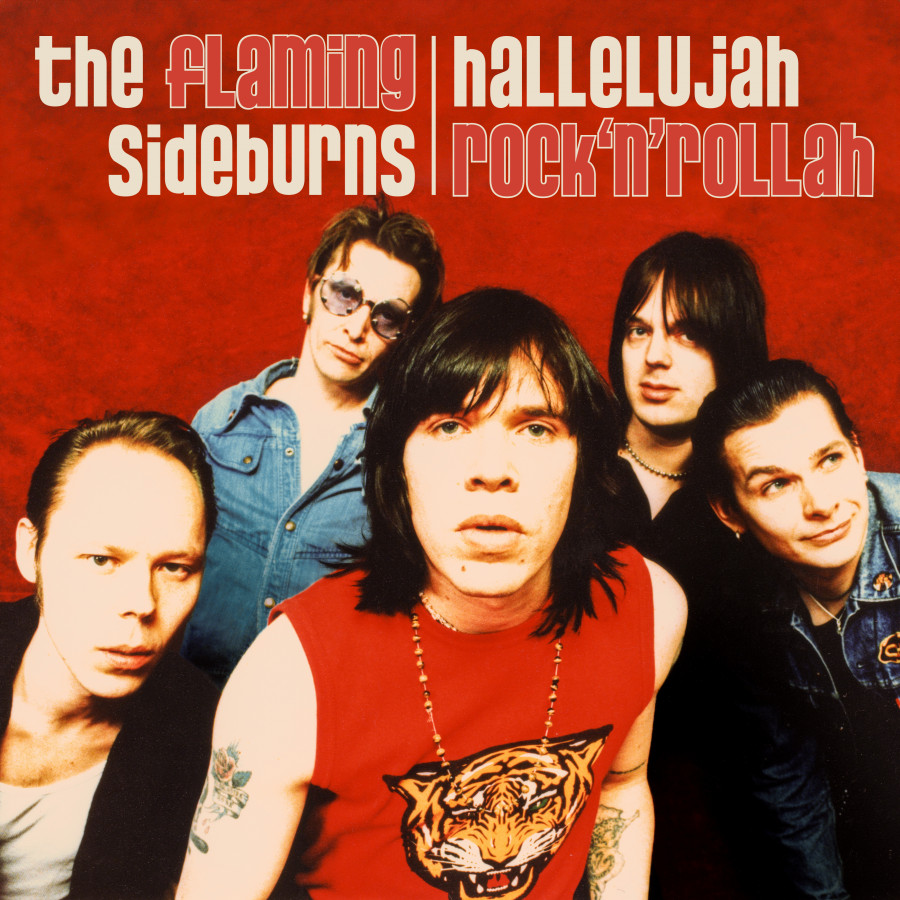
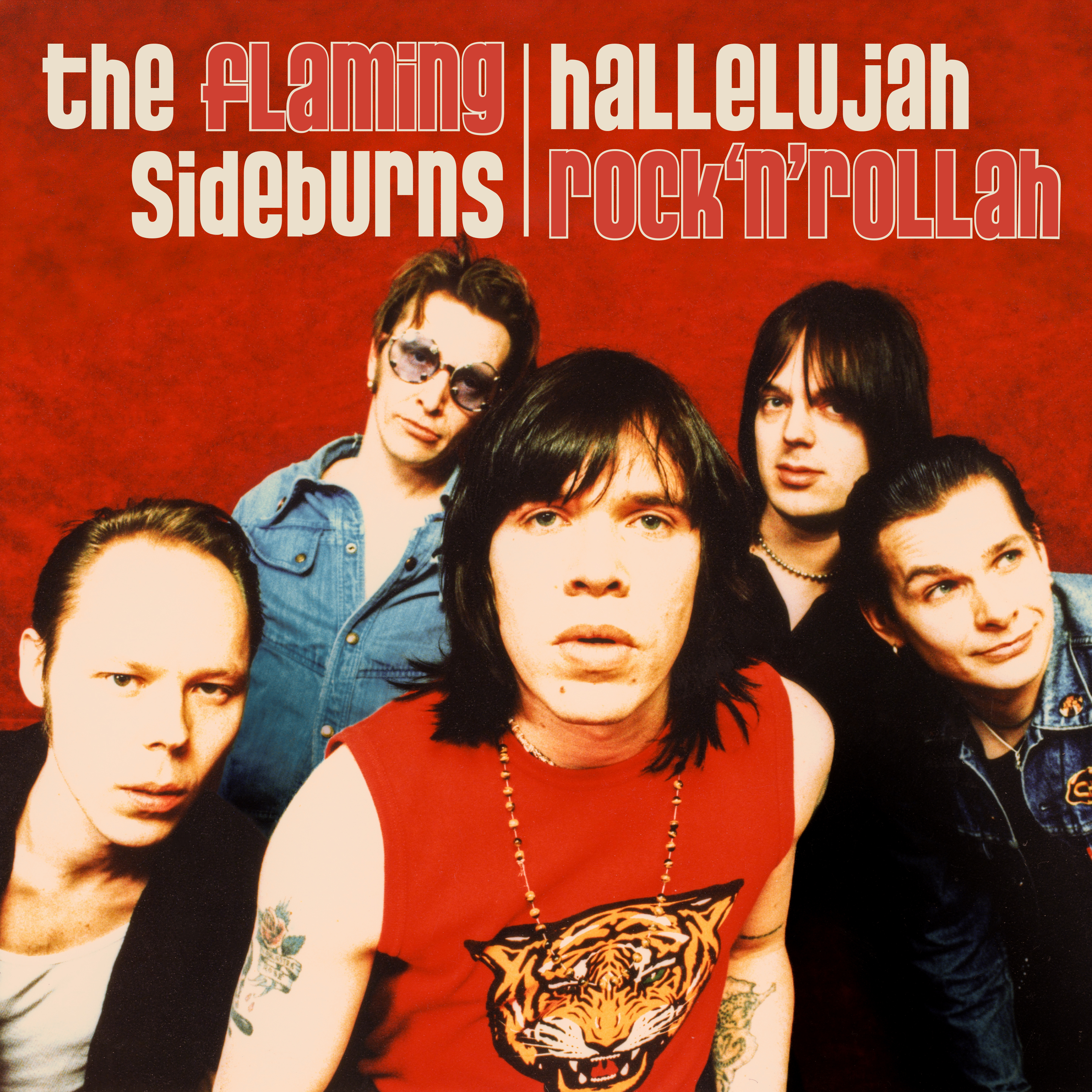

The Flaming Sideburns' debut album remastered 25th anniversary edition out in June via Svart Records
In the beginning of the new Millennium, The Flaming Sideburns were getting ready to record our first proper album. First we rented Ismo Alanko’s old rehearsal room in Otaniemi, Espoo, and turned it into a recording facility. Old analog tape recorders, vintage microphones, a Space Echo unit, and other top equipment were brought in directly from Berlin, Germany by the album’s producer, Jürgen Hendlmeier. We soon realized that this session would sound a whole lot different compared to our earlier recordings.
The Flaming Sideburns and Jürgen Hendlmeier go way back. In January 1996, the band laid down the very first studio tracks with Jürgen as producer at his studio in Berlin. Additionally, Jürgen had plenty of experience recording the band live and had already proved he could make those recordings sound amazing. That was the catch for us: he understood very well how to make us sound great.
It has always been a question of love and mutual respect while working with such an innovative, patient, and talented sound engineer as Jürgen. We were lucky enough to have him even on tour with us, mixing our most important concerts around the globe. When he first moved temporarily to Finland, Jürgen completed the mixing work for the compilation It’s Time To Testify… Brothers & Sisters (1999). Once established in Helsinki, he also produced three of our songs for White Trash Soul (2000), the split record with The Hellacopters. He is an essential part of the creation of our sound.
Now we finally had to deliver a whole album, recorded in a single session under the supervision of Hendlmeier and his Finnish recording team. It was a huge project for everybody and a dream situation for the band.
Our makeshift studio was located in the cellar of a large shopping center. Right above the studio there was a kiosk, which caused constant electrical issues in the building. To make matters worse, we also had a small and very noisy fridge in the studio, and you could hear a loud electrical buzz in almost every room. When we finished mixing the album we noticed that some of the electrical noise had ended up on the recordings. It wasn’t a huge problem, and by the time we realized it, it was already too late to start fixing it. Eventually we managed to wipe out most of those frequencies during the mastering.
As producer Jürgen Hendlmeier recalls the final steps of the sessions: “Fact is, when we mastered the record at Seawolf Studios we had no real idea what to do with this equipment. We just wanted to make it louder and louder – that was all we wanted. We wanted to go to twelve instead of eleven.” When Hallelujah Rock’n’Rollah was first released, it did not sound as “natural” as it had originally been planned to be – but the album was a huge success for the band nevertheless.
For this remastered edition, Hendlmeier dug deep enough to finally find the files containing all the original mixes. The album’s producer then remastered the album himself, and the end result is far more convincing. Compared to the original version—which is already very good—the album now feels as if it has been completely remixed for the better. As a bonus, on the original album some of the songs were edited shorter, but now all of them appear in their original length.